



Asana’s model is the project and task graph. Its AI Teammates are powerful because everything is structured in Asana — they get assigned tasks, read and write comments, and show up in the same activity feeds.
The best Asana alternative for execs who need follow-through
Asana is a leading work-management platform, and its AI Teammates act inside the Asana work graph. readywhen captures the commitments that never get entered — then pushes them in.
Quick answer
Asana is a leading work-management platform, and its AI Teammates act inside the Asana work graph. readywhen captures the commitments that never get entered as Asana work — the call aside, the Slack renegotiation, the emailed change of plan — and pushes them into Asana, owned and chased. Keep Asana; readywhen sits on top.
Who this page is for
Leaders who run on Asana and want the commitments that never make it onto a board captured and driven to done.
What makes readywhen different
The core difference

readywhen’s model is the commitment, wherever it was made — a Zoom call, a Slack DM, an email, a board review — and it pushes the captured commitment into Asana so the work graph stays complete.
Asana AI is only as complete as what’s been entered into Asana. readywhen captures what never gets entered, then pushes it in (labelled readywhen analysis).
Side by side
Feature comparison
Capability
At a glance
Anchor
AI action model
Captures informal commitments
Feeds the other
Trigger
Buyer

Commitments across all tools
Acts across Slack, email, calendar, CRM, tasks
Yes — from calls, Slack, email directly
Pushes captured commitments into Asana
Automatic — without you asking
C-suite, VPs, senior managers
Asana
The Asana work graph (projects, tasks)
Acts on Asana tasks; triggers/schedules
Only once they’re entered as Asana work
System of record for structured work
You/teammates structure the work first
PMO / team leads / ops
Where Asana excels
Asana’s AI Teammates are a serious, well-built capability — AI that lives in the project with shared team context. readywhen doesn’t try to be project management.
“Asana is a strong system of record for structured work. readywhen captures what never gets entered and pushes it in — a different job.”
Where Asana and readywhen fit together
The commitments execs most often lose never become structured Asana tasks. readywhen captures them off the call, the thread or the inbox — then pushes them into Asana so nothing sits outside the work graph (labelled readywhen analysis).
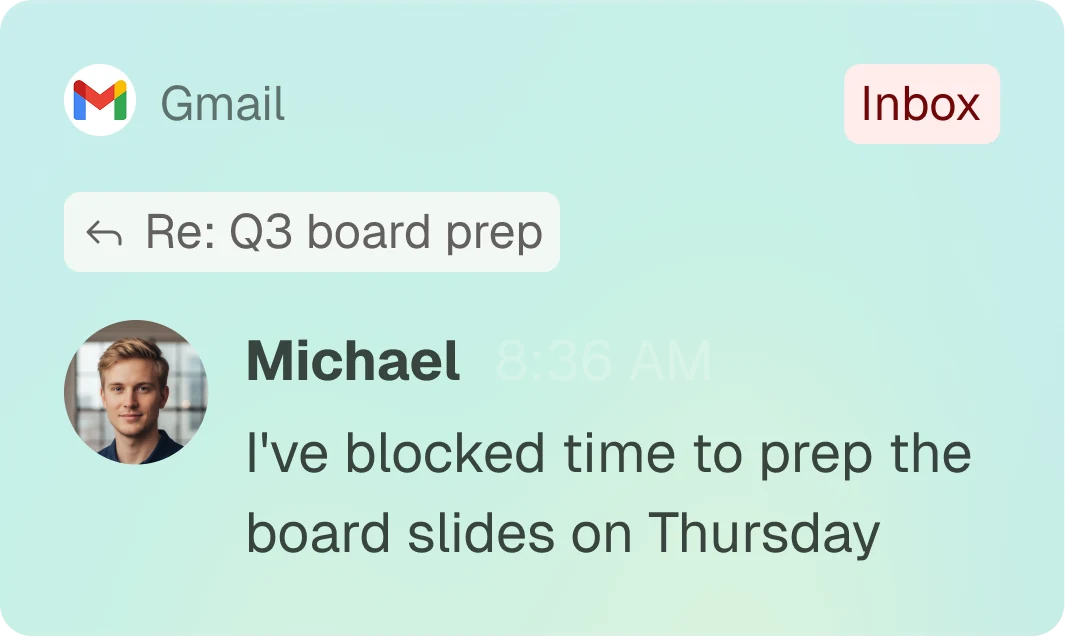
““I’ll get you that by Friday” on a call, a renegotiation in Slack, an emailed change of plan — these rarely become structured Asana tasks on their own.”
Where teams run both
Asana is the system of record; readywhen catches what never gets entered and pushes it in, owned and chased.
“Asana is where our structured work lives. readywhen catches the “I’ll handle that” that never became a task and files it for us.”
FAQ
Don’t Asana AI Teammates already do this?
Inside Asana, they do a lot. The limitation is everything that never becomes an Asana task — which is where most dropped executive commitments live. readywhen captures those and pushes them in.
Is readywhen a project management tool?
No. It doesn’t replace Asana’s boards, timelines or portfolios. It sits across tools and feeds the follow-through into Asana.
Should I choose Asana or readywhen?
It isn’t either/or. Asana does its job; readywhen does the execution job on top. Most teams run both — keep Asana and connect Asana so the things agreed around that work actually get done.